Urban Climate: Keeping Cities Livable with Climate Research
100% ONLINE
SELF-PACED
NO COST
2 hours
Summary
As early as the 1700 and 1800s, doctors and scientists observed that cities are warmer, moister and more likely sites for disease than their rural surroundings. Today’s scientists are working towards understanding precisely how cities impact climate and human health. Beyond that, they’re developing and testing approaches to mitigating urban climate, from planting trees to developing unique building materials.
What you'll learn:
In this certificate, you will learn how scientists are working towards understanding precisely how cities impact climate and human health.
Module and Content:
This certificate includes a handful of modules that include short videos, readings, and an optional worksheet to test your knowledge of the material.
Learning Objectives:
- Introduces the fundamental physical mechanisms that need to be considered to predict urban climate
- Explains the connections between urban climate and energy, water, air quality, and human health and wellbeing
- Presents several strategies for mitigating urban climate, and explains advantages and disadvantages of each approach.
Who is this certificate designed for:
If you are interested in the fundamental physical mechanisms that need to be considered to predict urban climate.
What you'll receive:
Upon finishing this certificate, students will receive an online certificate of completion.
Meet the instructors:
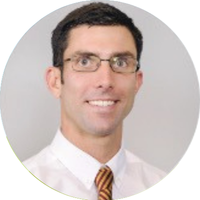
David Hondula, PhD
Associate Professor, SGSUP Arizona State University
Dr. Hondula is an Assistant Professor with the School of Geographical Sciences and Urban Planning at Arizona State University. Dr. Hondula obtained his PhD in Environmental Sciences from the University of Virginia. His research involves measuring and modeling personal heat exposure to help guide strategies that reduce risk of heat-related illness and death. Dr. Hondula is ASU’s lead contributor to the US Center for Disease Control’s Climate-Ready Cities and States Initiative, in collaboration with the Arizona Department of Health Services.
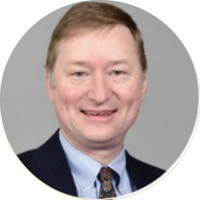
David Sailor, PhD
Professor, SGSUP Arizona State University
David Sailor is Professor in the School of Geographical Sciences and Urban Planning and Director of the Urban Climate Research Center-a center that leverages the diverse expertise of more than 36 faculty affiliates across 7 schools at ASU to develop and implement large-scale highly-interdisciplinary projects addressing crucial atmospheric environment challenges for cities. Prior to joining ASU, Sailor was on the faculties of Tulane University (1993-2003) and Portland State University (2003-2015). He served as the Director of the South Central Regional Center of the National Institute for Global Environmental Change (NIGEC) at Tulane and was the founding Director of the Green Building Research Laboratory at Portland State. He received his doctorate from the University of California at Berkeley in 1993, where he conducted research in collaboration with the Energy and Environment Division at Lawrence Berkeley National Laboratory.